
 Home




This Structure Makes the Diapers More Effective at Preventing Side Leakage Aimisin
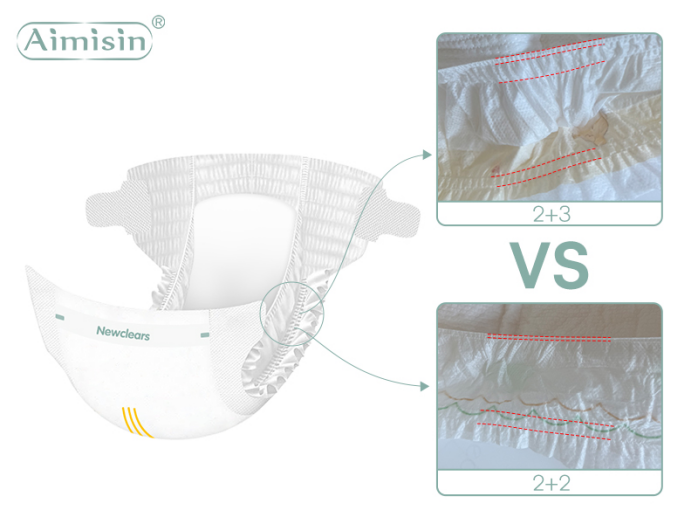
Key Differences:
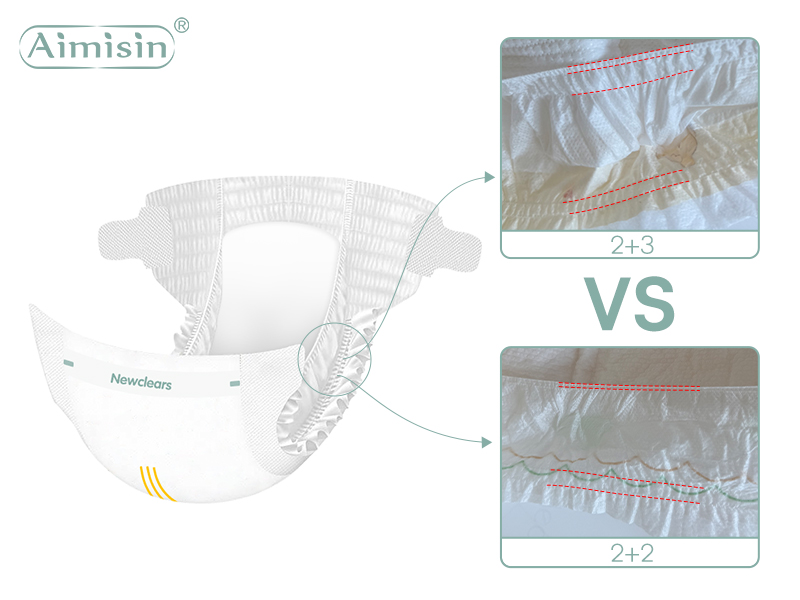
2+2: This refers to each leak-proof side panel (one on each leg of the diaper) being made of two layers of non-woven fabric, with two elastic bands attached to the inner side of each layer. Therefore, the total number of elastic bands per side panel is 4 (2 layers × 2 elastic bands/layer = 4).
2+3: This refers to each leak-proof side panel being made of two layers of non-woven fabric, one layer with 2 elastic bands and the other with 3 elastic bands. Therefore, the total number of elastic bands per side panel is 5 (2 elastic bands + 3 elastic bands = 5).
In short, the main difference is the total number and density of elastic bands within each side panel: "2+3" has one more elastic band than "2+2".
The resulting differences in actual effectiveness:
- Elasticity and fit:
2+2 (4 elastic bands): Provides basic elasticity, fitting well around the baby's groin to prevent side leakage. This is currently the mainstream and cost-effective configuration on the market, meeting the daily needs of most babies.
2+3 (5 elastic bands): More elastic bands usually mean more even elasticity, stronger contraction, and a tighter fit. Especially for babies with thinner thighs, high activity levels (toddler baby diaper), or those who sleep with a "wild" posture and like to roll around, it provides a stronger sense of envelopment and more effectively prevents urine from leaking out during movement.
- Leakage prevention: In extreme cases such as saturated absorbency or prolonged periods without diaper changes at night, the 2+3 structure, due to its tighter fit, theoretically offers a higher "safety margin" against leakage. It better locks in loose stools and urine, preventing back and side leakage.
- Softness and comfort: This is an aspect that needs to be weighed. More elastic bands might make the partition feel slightly more "present," but if the craftsmanship is excellent and the elastic bands are of high quality (e.g., thinner and more flexible), it won't increase friction or discomfort. High-end brands typically ensure the comfort of "2+3" through superior materials and design.
- Cost and Positioning:
2+2: Relatively lower cost, commonly found in mid-range and basic product lines.
2+3: Higher cost due to higher material (more elastic bands) and craftsmanship requirements, typically used in high-end series, nighttime diapers, or product lines emphasizing "super leak-proof" performance.
|
Feature |
2+2 |
2+3 |
|
Core Features |
Basic leak prevention, good fit, high cost performance |
It fits more tightly, is more elastic, and has a high degree of leak-proof redundancy. |
|
Applicable Scenarios |
Daily use, frequent replacements, for young babies |
For active babies, those who need to use the product for extended periods at night, and those who require a higher level of leak-proof protection. |
|
Product Positioning |
Mid-range and basic series |
High-end series, nighttime exclusive model |
How to Choose for Your Baby?
Newborns/Younger Babies (0-6 months): Babies are relatively inactive and require frequent bowel movements and changes. A "2+2" configuration is perfectly adequate, and a soft, skin-friendly feel is essential.
Older Babies/Active Babies (6 months and older): Especially babies starting to crawl or walk, who are very active and sleep longer at night. If side leakage is frequent, consider upgrading to "2+3" or more elasticated pull-up pants/pants with stronger leak-proof side panels.
Nighttime or Long Trips: For extended leak protection (e.g., all-night sleep), choose products labeled "Nighttime Dedicated," "Super Sleep," or "Premium Series." These products likely feature a "2+3" or better leak-proof design, and their core absorbent layer is also stronger.
Any inquiry for Newclears products, please feel free to contact us at WhatsApp/Wechat/Skype/Tel: +86 1735 0035 603 or mail: sales@newclears.com.